




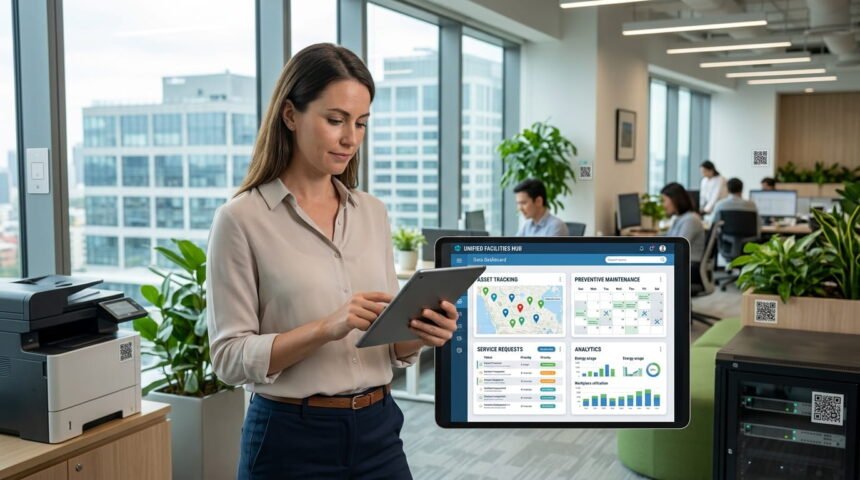
Modern workplaces are becoming increasingly complex. Businesses need to manage offices, equipment, maintenance schedules, contractors, security, and employee needs while keeping operating costs under control. As organizations grow, handling these responsibilities manually can become inefficient and difficult to scale.
Technology has therefore become an important part of modern facilities management. Digital platforms can help organizations organize information, improve communication, monitor facilities, and make better decisions based on real-time data.
What Is Facilities Management?
Facilities management involves coordinating the physical workplace and the services that support an organization’s daily operations.
Depending on the organization, facilities management may include:
- Building maintenance
- Workplace operations
- Cleaning and security
- Equipment management
- Space planning
- Vendor coordination
- Energy management
- Safety and compliance
- Maintenance scheduling
The goal is to ensure that facilities remain safe, functional, efficient, and suitable for the people who use them.
Why Traditional Facilities Management Can Be Challenging
Many organizations still rely on spreadsheets, emails, paper records, and disconnected software to manage facility-related tasks. While these tools can work for smaller operations, they can become difficult to maintain as the number of buildings, assets, and service requests increases.
Common challenges include:
- Missing maintenance information
- Delayed service requests
- Poor communication between teams
- Difficulty tracking assets
- Inconsistent reporting
- Limited visibility across multiple locations
A centralized digital approach can help bring these activities together.
The Role of Digital Facilities Management
Modern facilities management platforms can provide a central location for important workplace information. Instead of employees searching through multiple systems, relevant data can be organized within a single environment.
This can make it easier to track assets, monitor maintenance activities, manage service requests, and communicate with internal teams or external service providers.
For organizations managing complex workplace environments, Sclera provides technology designed to support facilities management and workplace operations.
Improving Maintenance Management
Preventive maintenance is an important part of keeping buildings and equipment operational.
Rather than waiting for equipment to fail, facilities teams can schedule inspections and maintenance at appropriate intervals. Digital systems can help track these schedules and provide reminders when action is required.
This proactive approach may reduce unexpected downtime and help extend the useful life of important equipment.
Better Asset Visibility
Large organizations can have thousands of assets spread across multiple facilities. Keeping accurate records of these assets can be challenging when information is stored manually.
A digital facilities management system can help teams record details such as:
- Asset location
- Equipment type
- Maintenance history
- Service schedules
- Responsible teams
- Current status
Better asset visibility allows facilities managers to make more informed decisions about maintenance, replacement, and resource allocation.
Managing Multiple Locations
Organizations with offices or facilities in different cities face additional challenges. Each location may have different maintenance requirements, vendors, equipment, and operational schedules.
Centralized technology can give management teams a broader view while allowing local teams to handle location-specific tasks.
This balance between centralized oversight and local management can improve consistency without removing flexibility.
Improving Workplace Communication
Facilities management often involves multiple departments and external contractors. A simple maintenance request may require communication between employees, facilities staff, vendors, and managers.
Digital workflows can make these interactions easier to track. Requests can be assigned to the appropriate person, updated as work progresses, and documented when completed.
This creates a clearer record and can reduce the chance of requests being overlooked.
Using Data for Better Decisions
One of the biggest benefits of digital facilities management is access to useful operational data.
Managers can analyze information about maintenance costs, equipment performance, service requests, workplace utilization, and other facility-related activities.
This information can help organizations identify recurring problems and determine where resources should be allocated.
Instead of making decisions based entirely on assumptions, facilities teams can use historical and current information to support planning.
The Importance of Scalability
Facilities management needs can change as a company grows. A system that works for a single office may not be suitable when an organization expands to dozens or hundreds of locations.
Scalable technology allows businesses to add facilities, users, assets, and workflows without completely changing their management processes.
When selecting a facilities management solution, organizations should consider both their current requirements and their expected future growth.
Choosing the Right Technology
Before adopting a digital facilities management platform, businesses should evaluate several factors.
Important considerations include:
- Ease of use
- Integration capabilities
- Reporting tools
- Asset management features
- Maintenance workflows
- Mobile accessibility
- Security
- Scalability
- Support and training
The best solution is not necessarily the one with the longest list of features. It should be a platform that fits the organization’s actual workflows and can be used effectively by its teams.
Final Thoughts
Facilities management plays a critical role in keeping modern workplaces safe, productive, and operational. As organizations become more complex, digital technology can help facilities teams manage assets, maintenance, service requests, and workplace information more efficiently.
By centralizing information and using data to guide decisions, organizations can improve visibility, reduce administrative work, and create more consistent facility management processes. The right technology can ultimately help facilities teams spend less time dealing with fragmented information and more time improving the workplace itself.