




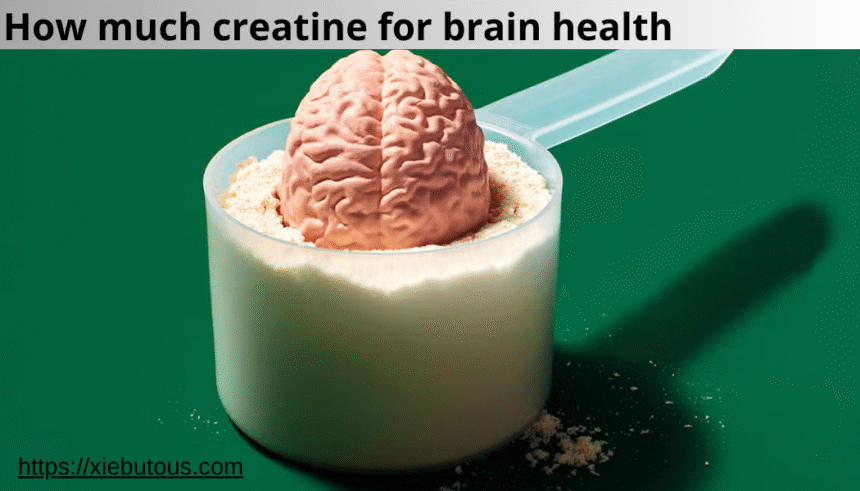
Creatine is one of the most researched supplements in the world. For years, people mainly connected it with muscle growth and athletic performance. But today, scientists and health experts are paying much more attention to another important topic: brain health.
Many people now ask questions like:
- How much creatine for brain health?
- How much creatine should I take for brain health?
- How much creatine per day for brain health?
- Is creatine good for memory and focus?
- Can creatine improve mental performance?
The growing interest makes sense. Modern life is mentally exhausting. Millions of people struggle with brain fog, stress, poor concentration, low energy, sleep deprivation, and mental fatigue. Students, professionals, gamers, entrepreneurs, and older adults are all searching for safe ways to support cognitive performance.
Creatine may help because the brain needs a huge amount of energy to function properly. Just like muscles use energy during exercise, the brain also uses energy during thinking, learning, memory, and decision-making.
This guide explains everything you need to know about how much creatine for brain health in simple and easy language. You will learn:
- What creatine actually does in the brain
- The ideal creatine dosage for cognitive support
- Whether loading phases are necessary
- Benefits for memory, focus, and mental energy
- The best type of creatine for brain health
- Potential side effects and safety concerns
- How age, diet, and lifestyle affect dosage
- Latest research and scientific insights for 2026
This article goes beyond basic summaries and provides practical, research-based analysis that most websites fail to explain clearly.
What Is Creatine?
Creatine is a natural substance found in the body. It helps produce energy.
Most creatine is stored in muscles, but some is also stored in the brain.
Your body naturally makes creatine from amino acids in the:
- Liver
- Kidneys
- Pancreas
You also get small amounts from foods such as:
- Red meat
- Fish
- Poultry
However, many people do not get enough creatine from diet alone, especially vegetarians and vegans.

That is why creatine supplements became popular.
The most common supplement form is creatine monohydrate.
Why the Brain Needs Creatine
The brain is one of the most energy-demanding organs in the body.
Even though the brain represents only a small percentage of body weight, it uses a very large amount of daily energy.
Brain cells constantly require fuel for:
- Memory
- Focus
- Learning
- Mood regulation
- Communication between neurons
- Decision-making
Creatine helps support ATP production.
ATP stands for adenosine triphosphate, which is the body’s main energy source.
When ATP levels become low, mental fatigue can increase.
This is one reason scientists believe creatine may support brain performance, especially during stress, sleep deprivation, intense mental work, or aging.
How Much Creatine for Brain Health?
The most common question is simple:
How much creatine for brain health?
Current research suggests that most adults benefit from:
3 to 5 grams of creatine monohydrate daily
This is considered the standard maintenance dose for both physical and cognitive support.
Many brain-related studies use doses in this range.
However, the ideal dosage can depend on several factors, including:
- Body size
- Age
- Diet
- Stress levels
- Sleep quality
- Cognitive demands
- Physical activity
For some individuals, slightly higher doses may be beneficial under professional supervision.
How Much Creatine Should I Take for Brain Health?
If you are asking how much creatine should I take for brain health, the answer depends on your goals.
For General Brain Support
3 to 5 grams daily is usually enough.
This supports:
- Mental energy
- Focus
- Cognitive resilience
- Brain ATP production
For Sleep Deprivation or Mental Fatigue
Some studies suggest higher temporary doses may help during periods of extreme cognitive stress.
For example:
- Students during exams
- Shift workers
- Military personnel
- People with poor sleep
In these situations, researchers sometimes study higher doses such as 10 to 20 grams daily for short periods.
However, this should only be done carefully and preferably with medical guidance.
For Vegetarians and Vegans
Vegetarians often have lower natural creatine stores because they eat less animal-based food.
Research suggests vegetarians may notice stronger cognitive benefits from supplementation.
A standard 5-gram daily dose is commonly recommended.
How Much Creatine Per Day for Brain Health?
The phrase “how much creatine per day for brain health” is becoming increasingly popular because people want exact daily recommendations.
Here is a practical guide.
Beginner Dose
3 grams daily
Good for:
- Beginners
- Smaller individuals
- Long-term daily use
Standard Cognitive Support Dose
5 grams daily
Good for:
- Most adults
- Focus support
- Memory support
- Mental performance
Advanced or High-Demand Situations
8 to 10 grams daily
Sometimes used for:
- Sleep deprivation
- Intense mental workload
- Research settings
Not always necessary for average users.
Does Creatine Actually Improve Brain Health?
This is where things become interesting.
The research is promising, but creatine is not a miracle supplement.
Its effects depend on the individual and situation.
Areas Where Creatine May Help
Research suggests creatine may support:
- Short-term memory
- Mental energy
- Processing speed
- Focus
- Cognitive resilience
- Brain recovery from stress
Strongest Benefits Appear During Stress
One important insight many articles ignore is this:
Creatine often works best when the brain is under pressure.
For example:
- Sleep deprivation
- Mental exhaustion
- Aging
- Nutritional deficiencies
- Intense studying
- Heavy multitasking
In healthy, well-rested individuals, the effects may be smaller.
Creatine and Brain Fog
Brain fog is one of the biggest modern health complaints.
People describe it as:
- Mental fatigue
- Difficulty concentrating
- Slow thinking
- Poor memory
- Low mental energy
Creatine may help because it improves cellular energy availability.
However, brain fog can have many causes, including:
- Poor sleep
- Stress
- Anxiety
- Nutrient deficiencies
- Hormonal problems
- Depression
Creatine is not a cure, but it may support mental clarity in some people.
Creatine and Memory
Memory requires large amounts of brain energy.
Some research suggests creatine supplementation may improve short-term memory and working memory.
Working memory helps you:
- Hold information temporarily
- Solve problems
- Learn new concepts
- Stay mentally organized
Students and professionals may especially benefit during mentally demanding periods.
Creatine and Focus
Focus depends heavily on brain energy balance.
When mental energy drops, concentration becomes harder.
Creatine may help maintain cognitive energy levels, particularly during:
- Long work hours
- Studying
- Sleep loss
- Intense concentration tasks
Many users report feeling mentally “sharper” after consistent supplementation.
Creatine and Sleep Deprivation
One of the most exciting research areas involves sleep deprivation.
Sleep loss reduces cognitive performance rapidly.
Research suggests creatine may partially reduce mental fatigue caused by lack of sleep.
This does not replace sleep.
But it may help the brain function better temporarily under exhaustion.
This is especially relevant for:
- Healthcare workers
- Parents
- Students
- Emergency workers
- Shift employees
Best Type of Creatine for Brain Health
When discussing creatine for brain health how much to take, many people also wonder about the best type.
The answer is surprisingly simple.
Creatine Monohydrate
This remains the gold standard.
Why?
Because it is:
- Most researched
- Affordable
- Effective
- Safe for long-term use
Many companies market expensive alternative forms, but most evidence still supports creatine monohydrate.
Do You Need a Loading Phase?
A loading phase means taking high doses for several days.
Typical loading protocol:
20 grams daily for 5 to 7 days
Then:
3 to 5 grams daily afterward
Is Loading Necessary for Brain Health?
Usually no.
Loading simply increases creatine stores faster.
But most people can skip it and still get benefits gradually over time.
A consistent daily dose works well for long-term cognitive support.
When Should You Take Creatine for Brain Health?
Timing matters less than consistency.
Still, many people prefer taking creatine:
- In the morning
- Before mentally demanding tasks
- After exercise
- With meals
Taking creatine with carbohydrates may improve absorption slightly.
The most important factor is taking it consistently every day.
How Long Does Creatine Take to Work for the Brain?
Brain-related benefits may take longer than muscle-related effects.
Some people notice improvements within days.
Others may need several weeks.
Common timeline:
First Week
- Slight mental energy improvements
- Better workout recovery
Weeks 2 to 4
- Improved consistency in focus
- Reduced mental fatigue
Long-Term Use
- Greater cognitive resilience
- More stable mental energy
Who May Benefit Most From Creatine?
Certain groups may experience stronger benefits.

Vegetarians and Vegans
They often start with lower creatine levels.
Older Adults
Brain energy production decreases with age.
Students
Heavy mental work increases energy demand.
Sleep-Deprived Individuals
Creatine may help support mental performance under fatigue.
Athletes
Both physical and cognitive recovery may improve.
Creatine and Aging Brain Health
Aging affects brain energy metabolism.
This may contribute to:
- Slower thinking
- Memory decline
- Reduced mental stamina
Researchers are increasingly studying whether creatine may support healthy cognitive aging.
While more research is needed, early findings are encouraging.
Can Creatine Help Anxiety or Depression?
This area is still developing.
Some research suggests brain energy metabolism may influence mood.
Low cellular energy can affect brain function broadly.
Creatine is not a replacement for therapy or medical treatment.
However, scientists are studying whether it may support mental wellness alongside other treatments.
This is an exciting area for future research.
Is Creatine Safe for the Brain?
Creatine is considered one of the safest supplements when used correctly.
Research spanning decades supports its general safety in healthy individuals.
Common Side Effects
Possible side effects may include:
- Water retention
- Mild stomach discomfort
- Bloating
These effects are usually temporary.
Kidney Concerns
Healthy people generally tolerate creatine well.
However, people with kidney disease should speak with a doctor before using creatine supplements.
Common Myths About Creatine
There is a lot of misinformation online.
Let’s clear up common myths.
Myth 1: Creatine Is a Steroid
False.
Creatine is not a steroid.
It is a natural energy-support compound.
Myth 2: Creatine Is Only for Bodybuilders
False.
Research now includes:
- Brain health
- Cognitive performance
- Aging
- Neurology
Myth 3: Creatine Damages Kidneys in Healthy People
Research does not support this claim in healthy users taking recommended doses.
Myth 4: Creatine Works Instantly
Not always.
Benefits often build gradually.
Does Diet Affect Creatine Needs?
Yes.
Diet plays a major role.
High Meat Intake
People who eat large amounts of red meat or fish may already have higher creatine stores.
Vegetarian Diets
Vegetarians and vegans often respond more strongly to supplementation.
This is because their baseline creatine levels may be lower.
Creatine and Exercise Together
Exercise itself supports brain health.
Combining exercise with creatine may create stronger benefits than either alone.
Exercise improves:
- Blood flow
- Neuroplasticity
- Mood
- Cognitive resilience
Creatine may further support energy metabolism.
This combination is one reason athletes often report mental benefits beyond physical performance.
Hydration and Creatine
Creatine increases water storage inside cells.
That is why hydration matters.
Drink enough water daily when using creatine supplements.
Proper hydration may also support mental clarity and cognitive function.
How to Choose a Quality Creatine Supplement
Not all supplements are equal.
Choose products that are:
- Third-party tested
- Pure creatine monohydrate
- Free from unnecessary fillers
Avoid products with exaggerated marketing claims.
Simple formulas are often best.
Does Creatine Work Better With Other Brain Supplements?
Some people combine creatine with:
- Omega-3 fatty acids
- Magnesium
- Caffeine
- L-theanine
However, stacking supplements is not always necessary.
Creatine alone may already provide noticeable support for mental energy.
The Realistic Truth About Creatine for Brain Health
One of the biggest problems online is exaggerated promises.
Creatine is not magic.
It will not instantly make someone a genius.
But it may support the brain’s energy systems in meaningful ways.
This distinction matters.
The strongest benefits likely occur in people who:
- Are mentally exhausted
- Have low creatine stores
- Experience sleep deprivation
- Have demanding lifestyles
Healthy habits still matter most.
These include:
- Sleep
- Nutrition
- Exercise
- Stress management
Creatine works best as part of a larger healthy lifestyle strategy.
Latest Research Trends in 2026
Research on creatine and cognitive health continues expanding.
Major trends include:
Brain Energy Research
Scientists are exploring how brain energy metabolism affects cognitive performance.
Neuroprotection Studies
Researchers are investigating whether creatine may support brain resilience during aging and neurological stress.
Women’s Brain Health
More studies now focus on hormonal changes, fatigue, and cognitive function in women.
Sleep and Cognitive Recovery
Sleep deprivation research remains one of the most promising areas.
Practical Daily Creatine Plan for Brain Health
Here is a simple beginner-friendly approach.
Week 1
Take 3 grams daily with breakfast.
Weeks 2 to 4
Increase to 5 grams daily if desired.
Long-Term
Continue 3 to 5 grams daily consistently.
Track changes in:
- Focus
- Mental energy
- Productivity
- Mood
- Cognitive endurance
Signs Creatine May Be Helping
Possible positive signs include:
- Better mental stamina
- Reduced brain fog
- More consistent concentration
- Improved recovery after mental stress
- Better cognitive endurance during long tasks
Effects vary between individuals.
Who Should Avoid Creatine Without Medical Advice?
Some people should speak with a healthcare professional first.
This includes individuals with:
- Kidney disease
- Serious medical conditions
- Certain medications
- Pregnancy concerns
Professional guidance is important for personalized safety.
Frequently Asked Questions
How much creatine for brain health is best for beginners?
Most beginners start with 3 to 5 grams daily.
How much creatine should I take for brain health if I am vegan?
Vegans often benefit from 5 grams daily because dietary creatine intake is lower.
How much creatine per day for brain health is considered safe?
Research commonly supports 3 to 5 grams daily for healthy adults.
Can creatine improve memory?
Some studies suggest creatine may support short-term memory and working memory.
Does creatine help brain fog?
It may help some people by supporting brain energy production, especially during fatigue.
Conclusion
Understanding how much creatine for brain health is becoming increasingly important as more people search for safe ways to support focus, memory, and mental energy.
Current evidence suggests that:
3 to 5 grams of creatine monohydrate daily
is a practical and research-supported dosage for most healthy adults.
Creatine is not a miracle solution, but it may support the brain’s energy systems in valuable ways.
The most promising benefits appear during periods of:
- Mental fatigue
- Sleep deprivation
- High cognitive demand
- Aging
- Low dietary creatine intake
If you are wondering:
- how much creatine should i take for brain health
- how much creatine to take for brain health
- how much creatine per day for brain health
- creatine for brain health how much
the answer for most people is simple:
Start with 3 to 5 grams daily consistently.
Combine it with healthy sleep, good nutrition, hydration, exercise, and stress management for the best long-term cognitive support.
As research continues growing in 2026 and beyond, creatine may become one of the most important supplements not only for physical performance but also for brain performance and mental resilience.