




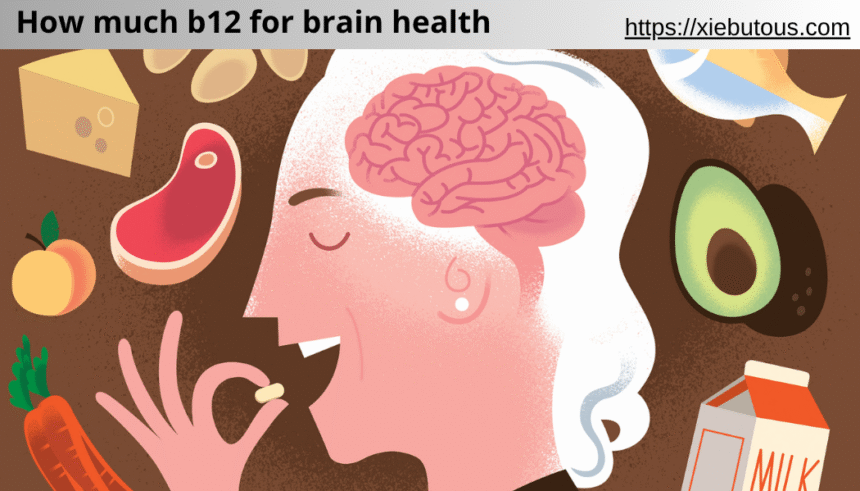
Vitamin B12 is one of the most important nutrients for the human brain. It supports memory, focus, nerve communication, mood balance, and overall mental performance. In recent years, more people have started asking an important question: how much B12 for brain health is actually needed?
The answer is more complex than many websites explain. The right amount of vitamin B12 depends on age, diet, health conditions, medications, stress levels, and even genetics. Some people get enough from food, while others may need supplements or injections to support healthy brain function.
Brain health has become a major concern in modern life. Long working hours, poor sleep, processed foods, stress, and aging can all affect cognitive performance. Vitamin B12 has gained attention because studies continue showing its connection to memory, mental clarity, nerve protection, and healthy aging.
This detailed guide explains everything you need to know about how much B12 for brain health, including:
- Recommended daily intake
- Best dosage for memory and cognition
- Signs of B12 deficiency
- Foods rich in B12
- Supplements and injections
- Risks of low B12 levels
- B12 and aging brains
- Scientific insights beyond basic advice
- FAQs most articles do not cover
This article uses simple English and updated information for 2026 while following modern SEO and E-E-A-T content principles.
What Is Vitamin B12?
Vitamin B12 is a water-soluble vitamin that helps the body perform many critical functions.
It is also called:
- Cobalamin
- Methylcobalamin
- Cyanocobalamin
Vitamin B12 is essential for:
- Brain health
- Nerve function
- Red blood cell production
- DNA synthesis
- Energy metabolism
Unlike some vitamins, B12 is mainly found in animal-based foods.

Why Vitamin B12 Matters for Brain Health
Before understanding how much B12 for brain health is ideal, it is important to know why the brain depends on this nutrient.
Supports Nerve Cells
Vitamin B12 helps maintain the protective covering around nerves called myelin. Without healthy myelin, nerve communication slows down.
Helps Memory Function
Low B12 levels are linked with memory problems, confusion, and poor concentration.
Supports Mood Balance
B12 helps produce neurotransmitters related to emotional stability.
Reduces Mental Fatigue
People with low B12 often feel mentally exhausted and unfocused.
Supports Healthy Aging
As people age, B12 absorption often decreases, increasing risks for cognitive decline.
How Much B12 for Brain Health Per Day?
This is the question most people want answered.
The Recommended Dietary Allowance (RDA) for adults in the United States is:
- 2.4 micrograms (mcg) daily
However, many experts believe higher levels may support optimal brain performance, especially in older adults.
General Daily Recommendations
Children
- 0.9–1.8 mcg
Teens
- 2.4 mcg
Adults
- 2.4 mcg minimum
Pregnant Women
- 2.6 mcg
Breastfeeding Women
- 2.8 mcg
Although these amounts prevent deficiency, they may not always support peak cognitive health.
Optimal B12 Levels for Cognitive Function
Modern research suggests brain health may benefit from maintaining higher blood levels of B12 than the bare minimum.
Some neurologists and nutrition experts recommend:
- 250–500 mcg daily for adults over 50
- 500–1000 mcg daily for people with absorption problems
- Higher therapeutic doses under medical supervision
This does not mean everyone needs large doses. The body absorbs only part of supplemental B12.
Why B12 Deficiency Is Increasing
Vitamin B12 deficiency is becoming more common worldwide.
Several modern lifestyle factors contribute to this problem.
Poor Diet Quality
Highly processed foods often lack natural nutrients.
Vegetarian and Vegan Diets
Plant foods contain very little natural B12.
Aging
Older adults absorb less B12 due to reduced stomach acid.
Digestive Disorders
Conditions like Crohn’s disease affect absorption.
Certain Medications
Some medicines interfere with B12 absorption.
Signs of Low B12 Affecting the Brain
Many people do not realize their brain symptoms may relate to low vitamin B12.
Common Cognitive Symptoms
- Brain fog
- Memory loss
- Poor focus
- Mental fatigue
- Slow thinking
- Confusion
Emotional Symptoms
- Anxiety
- Depression
- Mood swings
- Irritability
Neurological Symptoms
- Tingling hands or feet
- Numbness
- Balance problems
- Weakness
In severe cases, long-term deficiency may cause permanent nerve damage.
How the Brain Uses Vitamin B12
Understanding the science behind B12 helps explain why brain health depends on it.
Vitamin B12 participates in:
- Neurotransmitter production
- Homocysteine regulation
- DNA repair
- Nerve insulation
- Cellular energy production
One overlooked issue is homocysteine.
High homocysteine levels are associated with:
- Cognitive decline
- Stroke risk
- Brain aging
Vitamin B12 helps regulate homocysteine and protect brain cells.
Best Forms of Vitamin B12 for Brain Health
Not all B12 supplements are identical.
Methylcobalamin
This is often considered the best form for brain support because it is active and easily used by the nervous system.
Cyanocobalamin
This is the most common and affordable synthetic form.
Hydroxocobalamin
Often used in injections.
Adenosylcobalamin
Supports cellular energy production.
Many experts prefer methylcobalamin for neurological support.
How Much B12 for Brain Health in Older Adults
Older adults face a much higher risk of deficiency.
This happens because aging reduces stomach acid needed for absorption.
Why Seniors Need More Attention
Low B12 in seniors may resemble dementia symptoms.
Possible effects include:
- Forgetfulness
- Confusion
- Depression
- Reduced concentration
Many doctors now screen older adults regularly for B12 deficiency.
Can Vitamin B12 Improve Memory?
Vitamin B12 is not a miracle memory booster for everyone.
However, if memory problems result from low B12, supplementation can help significantly.
What Research Suggests
People with deficiency often experience improvements in:
- Concentration
- Mental clarity
- Energy
- Mood
- Short-term memory
People with already-normal B12 levels may not notice dramatic cognitive enhancement.
Foods Rich in Vitamin B12
Natural food sources remain one of the best ways to support healthy B12 intake.
Best Animal Sources
- Beef liver
- Salmon
- Tuna
- Eggs
- Milk
- Cheese
- Chicken
- Turkey
Fortified Foods
Some foods have added B12:
- Breakfast cereals
- Nutritional yeast
- Plant-based milk
Fortified foods are especially important for vegans.
Why Vegans and Vegetarians Need Special Attention
Plant foods naturally contain almost no reliable vitamin B12.
Vegans have one of the highest risks for deficiency.
Important Insight
Some websites incorrectly claim certain algae or mushrooms contain enough B12. In reality, many contain inactive forms that humans cannot use efficiently.
That is why vegan B12 supplementation is usually necessary.
Also read:How to Use Coconut Oil for Brain Health: Complete 2026 Guide for Better Memory and Mental Focus
B12 Injections vs Oral Supplements
People often wonder which method works better.
Oral Supplements
Good for most healthy individuals.
Sublingual Tablets
Dissolve under the tongue and may improve convenience.
Injections
Useful for:
- Severe deficiency
- Absorption disorders
- Pernicious anemia
Injections bypass the digestive system completely.
How Long Does It Take for B12 to Help Brain Function?
This depends on severity.
Mild Deficiency
Some people notice improvements within days or weeks.
Severe Deficiency
Recovery may take months.
Long-Term Deficiency
Some nerve damage may become permanent if untreated too long.
Early intervention matters greatly.
Can You Take Too Much B12?
Vitamin B12 is considered very safe because excess amounts are usually excreted through urine.
No official upper limit currently exists for healthy adults.
However, extremely high doses should still be discussed with a healthcare provider.
Best Time to Take Vitamin B12
Many people prefer taking B12 in the morning because it may increase energy.
Tips
- Take consistently daily
- Follow supplement directions
- Pair with healthy meals
Vitamin B12 and Mental Health
The connection between B12 and emotional well-being is often underestimated.
Low B12 may contribute to:
- Depression
- Mood instability
- Irritability
- Anxiety
This happens because B12 affects neurotransmitter production.
How Much B12 for Brain Health During Stress
Chronic stress increases nutrient demands.
People under heavy stress may experience faster nutrient depletion.
While there is no official “stress dosage,” healthcare providers sometimes recommend moderate supplementation during high-stress periods.
The Relationship Between B12 and Sleep
Vitamin B12 may indirectly support healthy sleep cycles through its effects on the nervous system and melatonin regulation.
However, taking large doses late at night may feel stimulating for some people.
Does B12 Help Brain Fog?
Brain fog is one of the most common complaints associated with low B12.
Symptoms include:
- Difficulty concentrating
- Forgetfulness
- Mental fatigue
- Slow thinking
If deficiency is present, proper B12 intake may help restore mental clarity.
B12 and ADHD-Like Symptoms
Emerging research suggests nutritional deficiencies can sometimes worsen attention issues.
Low B12 may contribute to:
- Poor focus
- Mental fatigue
- Reduced concentration
However, B12 is not a cure for ADHD.
B12 and Dementia Risk
Scientists continue studying connections between B12 deficiency and dementia.
While B12 does not cure Alzheimer’s disease, deficiency may worsen cognitive decline.
Maintaining healthy levels may support healthier brain aging.
Why Some People Cannot Absorb B12 Properly
Even people eating enough B12-rich foods may still become deficient.
Common Causes
- Pernicious anemia
- Gastric surgery
- Low stomach acid
- Crohn’s disease
- Celiac disease
This explains why blood testing matters.
Important Blood Tests for B12 Status
Doctors may use several tests.
Serum B12 Test
Basic measurement of B12 levels.
Methylmalonic Acid Test
More sensitive for detecting deficiency.
Homocysteine Test
High levels may indicate low B12.
What Is the Ideal B12 Blood Level?
Laboratory ranges vary.

Some experts argue “normal” lab ranges are too low for optimal neurological health.
Many functional medicine practitioners prefer higher-normal levels rather than barely adequate numbers.
How Much B12 for Brain Health in Children
Children need B12 for:
- Brain development
- Learning
- Focus
- Nervous system growth
Deficiency during childhood may affect cognitive development.
Parents following vegan diets for children should monitor B12 carefully with professional guidance.
B12 and Energy Production
Vitamin B12 helps convert food into usable energy.
Low levels may cause:
- Fatigue
- Weakness
- Poor mental stamina
Many people mistake deficiency-related fatigue for normal stress.
Does Coffee Affect B12?
Coffee does not directly destroy B12.
Also read:How to Improve Brain Health: The Complete Guide to Better Memory, Focus, and Mental Performance
However, excessive caffeine may contribute to nutrient imbalance indirectly through lifestyle habits.
Moderation remains important.
How Alcohol Impacts B12 Levels
Heavy alcohol use may interfere with:
- Nutrient absorption
- Liver storage
- Digestive function
Long-term alcohol overuse increases deficiency risk.
Best Combination Nutrients with B12
Vitamin B12 works especially well with:
- Folate
- Vitamin B6
- Iron
- Omega-3 fatty acids
These nutrients together support neurological health.
How Much B12 for Brain Health for Vegans
Many vegan experts recommend:
- 250–500 mcg daily
or - 2000 mcg weekly
Regular supplementation is strongly recommended for long-term vegans.
Why Brain Health Requires More Than One Nutrient
One major misunderstanding online is the belief that one vitamin alone can “optimize” the brain.
Brain health depends on:
- Sleep
- Exercise
- Stress management
- Nutrition
- Hydration
- Social connection
Vitamin B12 is important, but it works as part of a larger system.
Can Low B12 Cause Anxiety?
Yes, it can contribute in some individuals.
B12 affects the nervous system directly.
Low levels may increase:
- Nervousness
- Mood imbalance
- Mental exhaustion
However, anxiety always has multiple possible causes.
Can B12 Help Focus and Productivity?
People with deficiency often report:
- Better concentration
- Increased mental energy
- Improved alertness
Still, more is not always better.
Mega-dosing without deficiency may not improve productivity.
Best B12 Supplements for Brain Health
Quality matters.
Look for supplements that provide:
- Third-party testing
- Clear dosage labeling
- Trusted manufacturers
- Appropriate forms like methylcobalamin
Avoid unrealistic marketing promises.
How to Naturally Protect Brain Health
Vitamin B12 works best when combined with healthy habits.
Important Brain-Supporting Habits
- Regular exercise
- Quality sleep
- Balanced nutrition
- Stress reduction
- Mental stimulation
- Social activity
Modern Lifestyle and Hidden B12 Problems
One overlooked issue is that many modern symptoms mimic simple stress.
People often assume they are:
- Overworked
- Burned out
- Aging normally
But sometimes low B12 plays a role.
This is why testing and proper nutrition matter more today than ever before.
Future Research on B12 and Brain Health
Researchers continue studying:
- B12 and dementia prevention
- Neurological recovery
- Cognitive performance
- Mental health support
- Healthy aging
The science is evolving rapidly.
Final Thoughts
Understanding how much B12 for brain health is important because the brain depends heavily on this essential nutrient. While the official minimum intake for adults is 2.4 mcg daily, many people may benefit from higher intake depending on age, diet, lifestyle, and absorption ability.
Vitamin B12 supports:
- Memory
- Focus
- Mood
- Nerve function
- Mental energy
Deficiency can quietly affect cognitive performance for years before becoming obvious.
One of the biggest insights modern research offers is that “normal” deficiency prevention may not always equal “optimal” brain support. Maintaining healthy B12 levels through diet, testing, and appropriate supplementation may help support healthier cognitive aging and mental performance.
However, vitamin B12 should never be viewed as a miracle solution. Brain health depends on a complete lifestyle approach that includes nutrition, sleep, exercise, stress management, and medical care when needed.
Frequently Asked Questions
What is the best vitamin B12 dosage for brain health?
Many adults use 250–500 mcg daily for brain support, though needs vary.
Can low B12 cause memory problems?
Yes. Deficiency may contribute to forgetfulness and confusion.
Is methylcobalamin better for the brain?
Many experts prefer methylcobalamin because it is active and supports the nervous system directly.
How long does it take for B12 supplements to work?
Some people notice improvements within weeks, while severe deficiency recovery may take months.
Can vitamin B12 prevent dementia?
B12 does not cure dementia, but healthy levels may support cognitive health and reduce deficiency-related decline.